Fixture Congestion Patterns and Their Influence on Live Accumulator Selections in the Championship
Written by Parker Müller · Aug 22, 2026

Fixture Congestion Patterns and Their Influence on Live Accumulator Selections in the Championship
Understanding Schedule Density in England's Second Tier
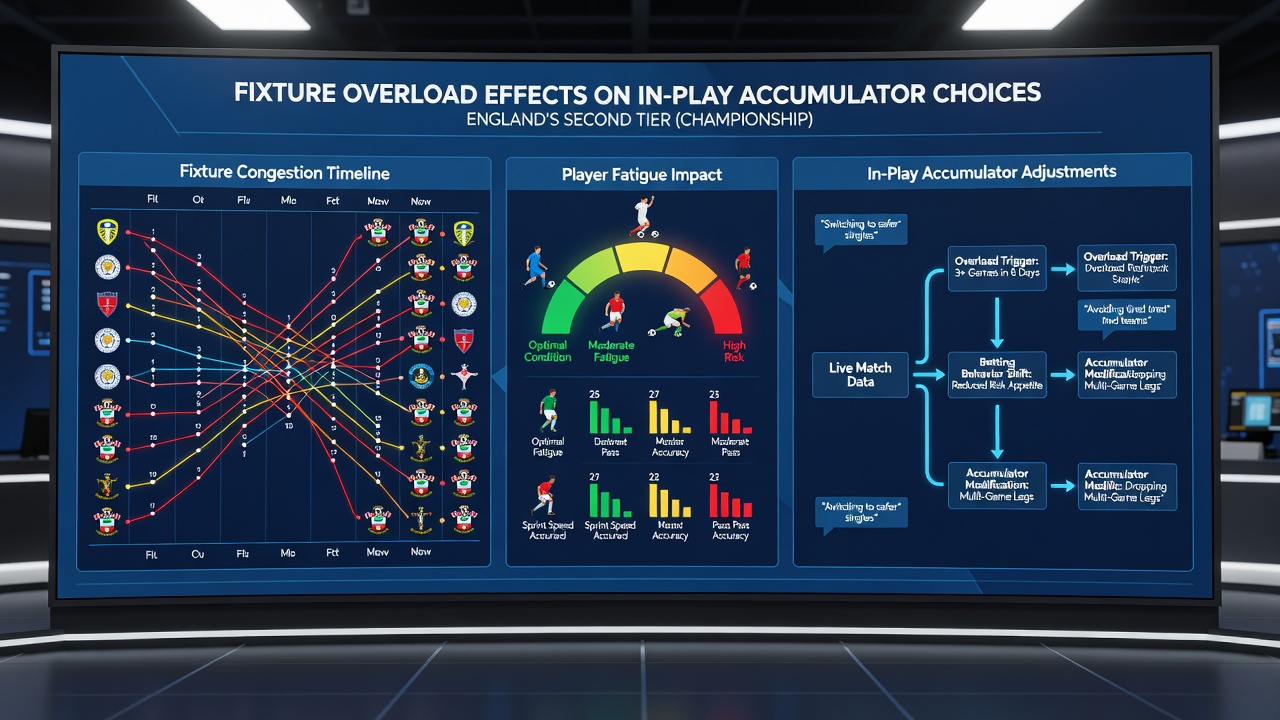
England's Championship features a demanding calendar that packs up to 46 regular-season fixtures into roughly nine months, and teams often face additional cup ties that compress recovery windows further. Observers note that this density creates periods where clubs play three matches in eight days, a pattern that repeats across promotion and relegation battles alike. Data from league records shows average rest intervals drop below 72 hours during winter blocks, and those intervals correlate with measurable declines in high-intensity running metrics tracked by performance analysts.
Performance Metrics Shift Under Repeated Short Recovery
Studies compiled by sports science departments at universities across Europe indicate that muscle glycogen replenishment requires at least 48 to 72 hours after intense Championship encounters, yet fixture lists sometimes allow only 48 hours between games. Players in central midfield and full-back positions register the sharpest drops in sprint count and pass completion during the second half of the second match in such sequences. League-wide statistics reveal an uptick in late-game goals conceded when squads have played twice in four days, a trend that directly shapes the live odds offered by bookmakers during in-play windows.
How Bettors Adjust Accumulator Construction in Real Time
In-play accumulator builders monitor fatigue indicators such as distance covered in the opening 15 minutes and set-piece concession rates, then adjust selections toward sides that maintain defensive shape despite limited rest. When a team sits in the middle of a three-game week, bettors frequently pivot away from that side's win leg and instead target under-total goals or draw outcomes because historical figures show lower-scoring games in those slots. The approach relies on granular data feeds that update every minute, allowing accumulators to be rebuilt mid-match rather than locked in pre-kickoff.
August 2026 Scheduling and Early-Season Overlap
As the 2026-2027 Championship campaign opens in August 2026, the first international break arrives only after six league rounds, leaving several clubs with midweek fixtures stacked against weekend travel. Early-season congestion has historically produced higher draw percentages in weeks three through five, according to archived league tables. Bettors who track these patterns often insert draw or low-scoring legs into accumulators when two promotion contenders meet on short rest, because the data pattern repeats across multiple seasons.
Regional Research and Comparative Scheduling Insights
Reports published by the UEFA club licensing and financial sustainability unit compare fixture loads across Europe's top divisions and note that English second-tier clubs average more domestic matches per player than counterparts in Germany or France. A separate analysis from Australian sports science researchers at the University of Canberra highlights similar recovery challenges in the A-League during Christmas periods, confirming that the physiological response to congestion follows consistent patterns regardless of league geography. These cross-regional findings supply additional context for Championship bettors who factor international scheduling models into their live accumulator decisions.
Concrete Examples from Recent Congested Blocks
One midweek block in January 2025 saw six Championship sides contest matches on both Tuesday and Saturday, and four of those teams recorded fewer than 1.8 expected goals created across the pair of fixtures. Live bettors responded by shifting accumulator weight toward the opposing sides' clean-sheet legs after the first match concluded. In another instance, a club involved in both league and cup action over five days conceded from set pieces in the final 20 minutes of each game, prompting in-play markets to shorten odds on late corners and throw-ins once the pattern became visible through real-time statistics.
Conclusion
Fixture congestion in the Championship produces predictable shifts in match statistics that in-play accumulator participants incorporate through continuous data monitoring and rapid leg adjustments. League records, performance tracking systems, and comparative studies from multiple regions demonstrate consistent relationships between recovery time and outcome distributions. As schedules remain dense through the 2026-2027 season and beyond, those who follow the measurable effects on team output continue to refine their live betting frameworks around the same core indicators.