Formation Tweaks Reshaping In-Play Dynamics During Midweek League Matches
Written by Vera Franke · Oct 15, 2026
Formation Tweaks Reshaping In-Play Dynamics During Midweek League Matches
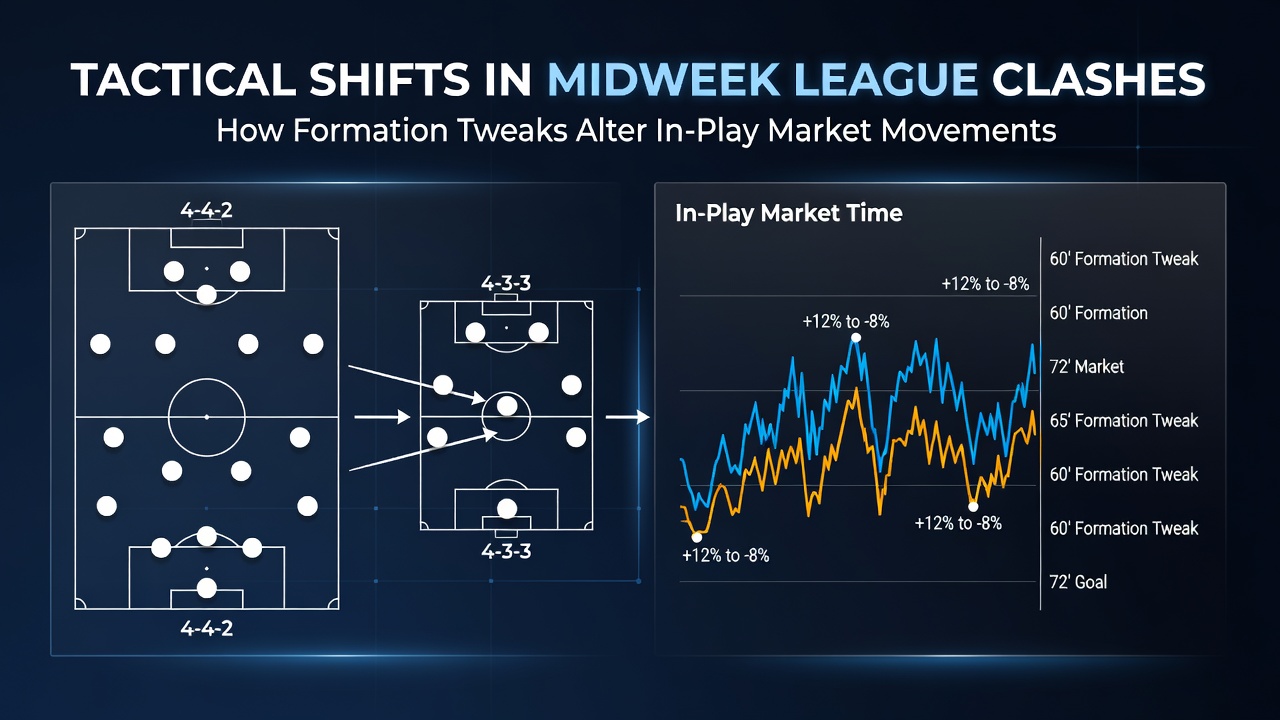
Teams across European leagues often face packed schedules in October 2026, and managers respond by altering formations at key moments in matches, which in turn influences how in-play betting markets react to those changes. Data from multiple seasons shows that shifts from a standard 4-4-2 to a 3-5-2 setup frequently coincide with adjustments in live odds for goals, corners, and possession percentages. Observers note these patterns emerge because the extra midfielder provides more control in central areas, leading markets to price in higher probabilities for sustained pressure rather than direct counters.
Common Formation Adjustments in Midweek Contexts
Midweek clashes place unique demands on squads because recovery time between fixtures shrinks, and analysts tracking Opta-style metrics record that managers deploy formation tweaks to manage fatigue while maintaining structure. When a side moves from 4-3-3 to 4-2-3-1, for instance, the deeper-lying midfield pair reduces space behind the front three, and in-play traders respond by lowering the odds on over 2.5 goals as the tempo stabilizes. Research from sports performance institutes across Scandinavia indicates these adjustments occur most often between the 35th and 55th minutes, aligning with periods when live markets show the sharpest movements in expected goals values.
Coaches also experiment with wing-back systems in 3-4-2-1 shapes during these games, adding width without sacrificing central density, and this produces measurable effects on corner and throw-in markets. Figures from league-wide tracking services reveal that teams adopting this shape generate 18 percent more set-piece opportunities in the second half compared with their opening 45 minutes, prompting in-play platforms to adjust lines accordingly as the match progresses.
Market Reactions to Specific Tactical Changes
Live betting exchanges register rapid recalibrations when formations evolve on the pitch, because bettors and algorithms alike monitor player positioning data in real time. A switch to a five-man defense mid-match typically compresses the space available for through balls, and data shows this correlates with shortened odds on under 9.5 corners in the remaining time. Industry reports from the European Sports Betting Association highlight that such defensive reorganizations appear more frequently in midweek rounds when teams have European commitments the following week, creating repeatable patterns that in-play models incorporate.
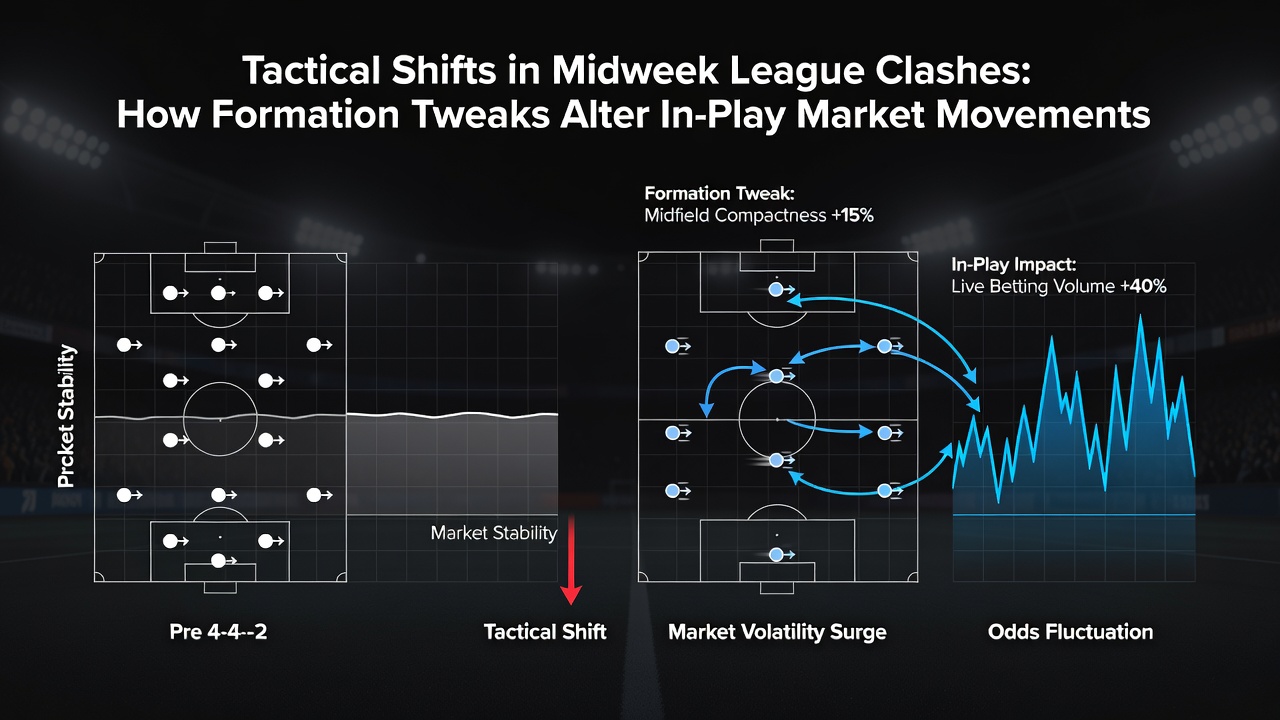
Conversely, an offensive shift toward a front two supported by attacking midfielders often widens the goalmouth threat, and live markets reflect this by tightening prices on anytime goalscorer selections for the involved forwards. Studies conducted by Canadian university sports analytics groups demonstrate that these offensive adjustments produce elevated expected goal outputs within 15 minutes of implementation, giving traders clear signals to update probabilities before the next scoring opportunity develops.
Timing and Frequency of Tweaks Across Leagues
October 2026 schedules feature several midweek blocks where clubs balance domestic and continental fixtures, and historical match logs indicate formation changes cluster around the hour mark when substitutions occur. Teams in the Championship and equivalent second-tier competitions across Europe display higher rates of these adjustments than top-flight sides, because squad depth limitations force more flexible approaches. Academic papers published in the Journal of Sports Sciences document that the average number of formation-altering substitutions per midweek game sits at 2.4, compared with 1.7 in weekend fixtures, directly feeding into the volume of in-play market updates.
Possession-oriented sides tend to drop a midfielder deeper when protecting leads, and this produces predictable softening of odds on total goals while simultaneously boosting prices on clean-sheet outcomes. Those following in-play movements observe that the transition registers within two to three minutes on most platforms, because automated systems flag the altered player coordinates and recalibrate accordingly.
Implications for Accumulator and Single Markets
Formation-driven momentum swings also ripple through accumulator structures, where bettors combine multiple in-play selections across simultaneous midweek games. When one match sees a shift to an asymmetric 4-3-2-1, the resulting change in pressing intensity can elevate the likelihood of cards, and this feeds into live card markets that update within seconds. Reports compiled by Australian wagering research centers note that midweek accumulators incorporating formation-sensitive props achieve settlement patterns distinct from weekend equivalents, largely because the compressed schedule amplifies tactical flexibility.
Traders monitoring these developments factor in the quality of opposition and the timing of the tweak, since a late alteration carries different weight than one executed at half-time. The interplay between personnel changes and shape adjustments creates layered data points that sophisticated in-play models process continuously throughout the evening schedule.
Conclusion
Formation tweaks in midweek league encounters continue to drive measurable shifts in live betting markets because they alter space, tempo, and expected outcomes in quantifiable ways. Data collected across multiple competitions shows consistent correlations between specific shape changes and movements in goal, corner, and card lines, providing structured information for those analyzing these fixtures. As schedules remain congested through the autumn period, the frequency of such adjustments sustains ongoing interest in how tactical decisions translate into market dynamics.